Introduction
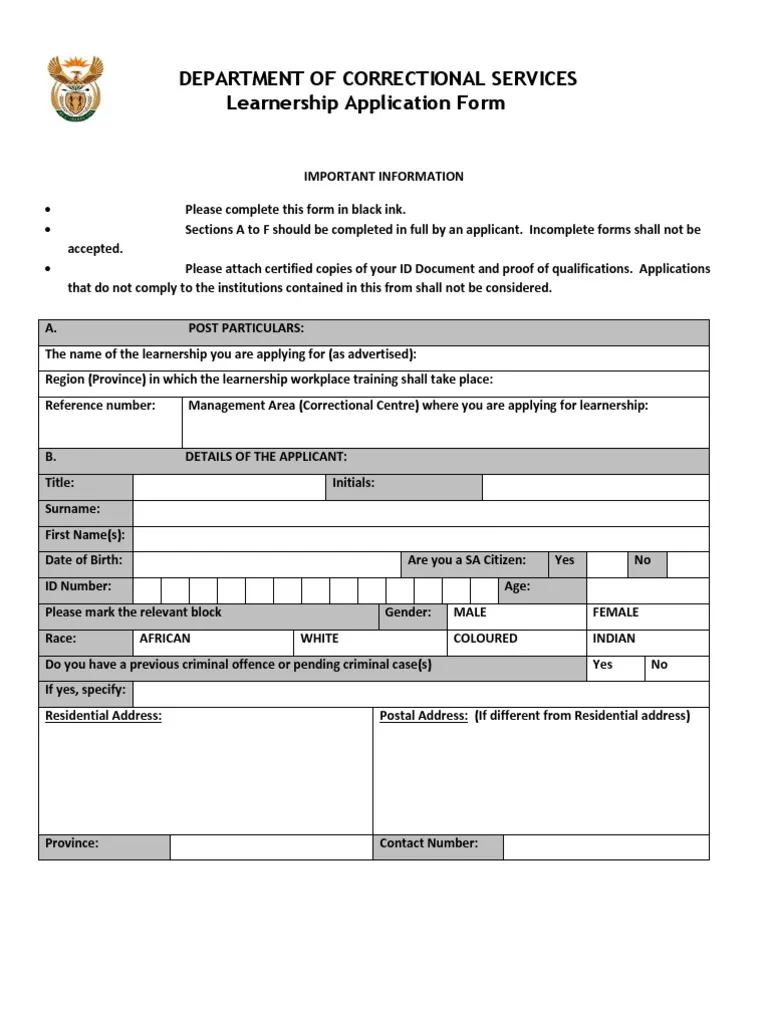
One of the most common reasons learnership applications are unsuccessful in South Africa is missing or incorrect documentation. Many applicants meet the minimum requirements and have genuine interest, but their applications are rejected simply because one or more required documents were not included, not certified, or submitted incorrectly.
For first-time applicants especially, it is not always clear which documents are required, how they should be prepared, or how they should be submitted. Different learnership adverts may request slightly different documents, which can add to the confusion.
This article provides a clear, detailed explanation of the documents typically required for learnership applications in South Africa, why each document is important, how to prepare them correctly, and common mistakes to avoid. This is not a promise of acceptance, but a practical guide to submitting a complete and compliant application.
Why Documents Matter in Learnership Applications
Learnership providers receive a large number of applications for a limited number of spaces. To manage this volume fairly and efficiently, they rely on document-based screening.
Documents are used to:
-
Verify your identity
-
Confirm your education level
-
Check eligibility requirements
-
Ensure compliance with regulations
-
Support fair selection
If documents are missing or incorrect, your application may be rejected before it is even reviewed in detail.
Do All Learnerships Require the Same Documents?
No.
While most learnerships require similar core documents, requirements can vary depending on:
-
The employer
-
The training provider
-
The industry
-
Whether the learnership is funded
-
Whether it targets employed or unemployed learners
However, there is a standard set of documents that are commonly required across most learnership applications. Preparing these in advance makes applying much easier.
Core Documents Required for Most Learnership Applications
The following documents are requested in the majority of learnership applications in South Africa.
1. South African ID (Certified Copy)
Your South African identity document is one of the most important documents in a learnership application.
Why It Is Required
Your ID is used to:
-
Confirm your identity
-
Verify citizenship or residency status
-
Check age requirements
-
Register you on official systems
Without a valid ID, your application cannot proceed.
What to Submit
-
A certified copy of your South African ID
-
Either a green ID book or smart ID card
Certification is usually required to confirm that the copy is a true representation of the original.
Common Mistakes
-
Submitting an uncertified copy
-
Submitting an expired or damaged ID
-
Submitting someone else’s ID by mistake
Always double-check this document.
2. Curriculum Vitae (CV)
A CV is almost always required, even for learnerships that accept applicants with no work experience.
Why a CV Is Required
Your CV helps selectors understand:
-
Your education level
-
Your skills
-
Your background
-
Your career interest
For learnerships, a CV does not need extensive work history, but it must be clear, honest, and well structured.
What Your CV Should Include
-
Personal details
-
Short personal profile
-
Education
-
Skills
-
Any additional training or activities
Your CV should usually be 1–2 pages long.
3. Educational Certificates or Results
Learnerships are linked to qualifications, so proof of education is essential.
What This May Include
Depending on your level, you may be asked for:
-
Matric certificate
-
Statement of results
-
Highest grade passed (e.g. Grade 9, 10, or 11)
-
TVET or tertiary certificates (if applicable)
Why This Is Required
Education documents are used to:
-
Confirm you meet minimum requirements
-
Place you at the correct NQF level
-
Ensure compliance with qualification rules
Submitting the wrong document can result in rejection.
📌 Preparing Your Application Documents Correctly


(This image represents a generic, professional document-preparation environment, similar to Shutterstock editorial stock.)
4. Certified Copies of Qualifications
Most learnerships require certified copies, not original documents.
What Certification Means
Certification confirms that:
-
The copy is a true copy of the original
-
The document has been officially verified
Certification is usually done by:
-
Police stations
-
Post offices
-
Commissioners of Oaths
Common Certification Mistakes
-
Certification older than accepted timeframe
-
Certification stamp missing or unclear
-
Copy not signed by certifying officer
Always ensure certification is clear and legible.
5. Proof of Address (Sometimes Required)
Not all learnerships require proof of address, but some do.
Why Proof of Address Is Requested
It may be used to:
-
Confirm residency
-
Allocate learners to nearby workplaces
-
Support administrative records
Acceptable Documents
-
Utility bill
-
Municipal letter
-
Affidavit confirming address
If required, ensure the document is recent.
6. Motivational Letter (If Requested)
Some learnership applications require a motivational letter or written motivation.
Why This Is Required
A motivational letter helps selectors understand:
-
Why you are applying
-
Your interest in the learnership
-
Your commitment to learning
Not all learnerships require this, but if requested, it should be included.
Common Mistakes
-
Submitting a generic letter
-
Copying content from the internet
-
Writing overly long letters
Keep it clear, honest, and relevant.
7. Proof of Unemployment (In Some Cases)
Some learnerships are specifically for unemployed individuals.
Why This Is Required
It helps organisers:
-
Confirm eligibility
-
Allocate funding correctly
Possible Documents
-
Signed affidavit confirming unemployment
-
UIF status confirmation (if requested)
Only submit this if the advert requests it.
8. Medical or Disability Confirmation (If Applicable)
For learnerships targeting people living with disabilities, additional documents may be required.
Purpose of These Documents
They are used to:
-
Ensure appropriate support
-
Support inclusive placement
-
Meet programme objectives
Medical information is handled confidentially and should only be submitted if requested.
Optional Documents That May Be Requested
Some learnerships may ask for additional documents depending on the programme.
Examples Include
-
Academic transcripts
-
Short course certificates
-
Driver’s licence (for certain roles)
-
Proof of banking details (after selection)
Only submit additional documents if requested.
How to Organise Your Documents Before Applying
Good organisation reduces mistakes.
Recommended Preparation Steps
-
Create a dedicated folder
-
Label each document clearly
-
Check that files open correctly
-
Save documents in PDF format unless stated otherwise
Being organised saves time and reduces stress.
File Format and Submission Rules
Many applications fail due to incorrect file handling.
Common Requirements
-
PDF format preferred
-
One combined document if requested
-
Clear file names (e.g. ID_Name.pdf)
Always follow the advert’s instructions exactly.
Online Applications vs Email Applications
Online Applications
-
Documents uploaded individually or together
-
File size limits may apply
-
Ensure uploads are successful
Email Applications
-
Attach all required documents
-
Use correct subject line
-
Avoid sending multiple emails
Different methods require different care.
 Common Document-Related Reasons for Rejection
Many applications are rejected because of:
-
Missing documents
-
Uncertified copies
-
Incorrect file formats
-
Illegible scans
-
Submitting the wrong documents
Most of these issues are preventable.
How to Double-Check Before Submitting
Before submitting, ask yourself:
-
Have I included all required documents?
-
Are copies certified where required?
-
Are files clear and readable?
-
Have I followed the instructions exactly?
A final review can prevent rejection.
Are Original Documents Ever Required?
No.
You should never send original documents with an application.
Original documents are only presented:
-
During interviews
-
At registration stage
-
After selection
Applications use copies only.
How Documents Are Used After Selection
Once selected, documents may be used to:
-
Register you with Sector Education and Training Authorities (SETAs)
-
Finalise contracts
-
Confirm eligibility
This is why accuracy is important from the start.
Keeping Your Documents Updated
Documents should be kept up to date, especially:
-
CVs
-
Certified copies
-
Proof of address
Outdated documents can delay or affect applications.
Document Safety and Privacy
Always protect your personal information.
Safety Tips
-
Do not share documents with unverified sources
-
Avoid public posting of ID copies
-
Verify opportunities before submitting documents
Legitimate learnerships will not misuse your information.
How learners247.co.za Helps Applicants Prepare Documents
Platforms like learners247.co.za help learners by:
-
Explaining document requirements clearly
-
Reducing misinformation
-
Helping applicants avoid common mistakes
-
Supporting informed applications
Preparation builds confidence.
Final Thoughts
Preparing the correct documents is one of the most important steps in a learnership application. While it may seem simple, many applications fail because of small, avoidable document-related mistakes.
By understanding which documents are required, why they matter, and how to prepare them correctly, you can submit applications that are complete, compliant, and professional. While documents alone do not guarantee selection, they ensure that your application is properly considered.
Preparation is not about perfection — it is about readiness.