How to Write a Learnership CV With No Experience in South Africa
Introduction
One of the biggest reasons many young South Africans struggle to secure a learnership is not lack of ability, motivation, or potential — it is the CV.
For learners with no work experience, writing a CV can feel intimidating. Many believe that without job history, there is nothing worth including. As a result, they either submit very weak CVs or do not apply at all.
The truth is this: learnership CVs are not the same as job CVs.
Employers offering learnerships understand that applicants may have no formal work experience. What they are looking for instead is potential, readiness to learn, basic skills, and commitment. A well-written CV — even without experience — can significantly improve your chances of being shortlisted.
This guide explains step by step how to write a learnership CV with no experience in South Africa, what to include, what to avoid, and how to present yourself professionally.
What Is a Learnership CV?
A learnership CV is a document that introduces you to an employer or training provider offering a learnership. Unlike traditional job CVs, it focuses less on employment history and more on:
-
Education
-
Skills
-
Personal attributes
-
Willingness to learn
-
Career interest
The goal is not to prove that you are experienced, but to show that you are trainable, reliable, and motivated.
Why Your CV Matters for Learnership Applications
Even though learnerships are entry-level programmes, employers still receive hundreds or even thousands of applications. Your CV is often the first and only document used to decide whether you move to the next stage.
A good CV helps you:
-
Stand out from other applicants
-
Show seriousness and professionalism
-
Communicate clearly
-
Avoid automatic rejection
A poor CV, even if you meet all requirements, can result in rejection.
Can You Really Get a Learnership With No Experience?
Yes.
Many learnerships are specifically designed for people with no work experience.
What employers look for instead:
-
Basic communication skills
-
Commitment and reliability
-
Ability to follow instructions
-
Willingness to learn
-
Interest in the field
Your CV should reflect these qualities.
Before You Start Writing Your CV
Before opening a document, take a few minutes to prepare.
Ask yourself:
-
What qualification do I have?
-
What subjects did I pass?
-
What skills do I already have?
-
What kind of learnership am I applying for?
Tailoring your CV to learnerships — not jobs — is key.
The Correct Length for a Learnership CV
Your CV should be:
-
1 to 2 pages maximum
-
Clear and easy to read
-
Well-structured
-
Free of unnecessary information
Longer CVs are often ignored.
Recommended CV Structure for Learnerships
A learnership CV should include the following sections (in this order):
-
Personal Details
-
Personal Profile
-
Education
-
Skills
-
Additional Training or Activities
-
References
Each section serves a purpose.
1. Personal Details (What to Include and What to Avoid)
Include:
-
Full name
-
South African ID number (optional but common)
-
Contact number
-
Professional email address
-
City or province
Do NOT include:
-
Home address
-
Religion
-
Race
-
Marital status
-
Photograph (unless requested)
Keep this section simple and professional.
2. Personal Profile (Very Important)
This is a short paragraph at the top of your CV that explains who you are and what you are applying for.
Example of a Good Personal Profile
“I am a motivated and reliable matric graduate seeking a learnership opportunity to gain practical workplace experience and develop industry-relevant skills. I am eager to learn, able to work well in a team, and committed to completing the learnership successfully.”
This section helps employers understand your intention immediately.
3. Education Section (Your Strongest Area)
Since you have no work experience, your education section becomes very important.
Include:
-
Highest grade passed
-
School or institution name
-
Year completed
-
Relevant subjects
Example
Grade 12 (Matric)
ABC Secondary School – 2024
Subjects: English, Mathematical Literacy, Life Orientation, Business Studies
If you did not complete matric, list your highest grade passed honestly.
📌 Example of a Learnership CV in Progress

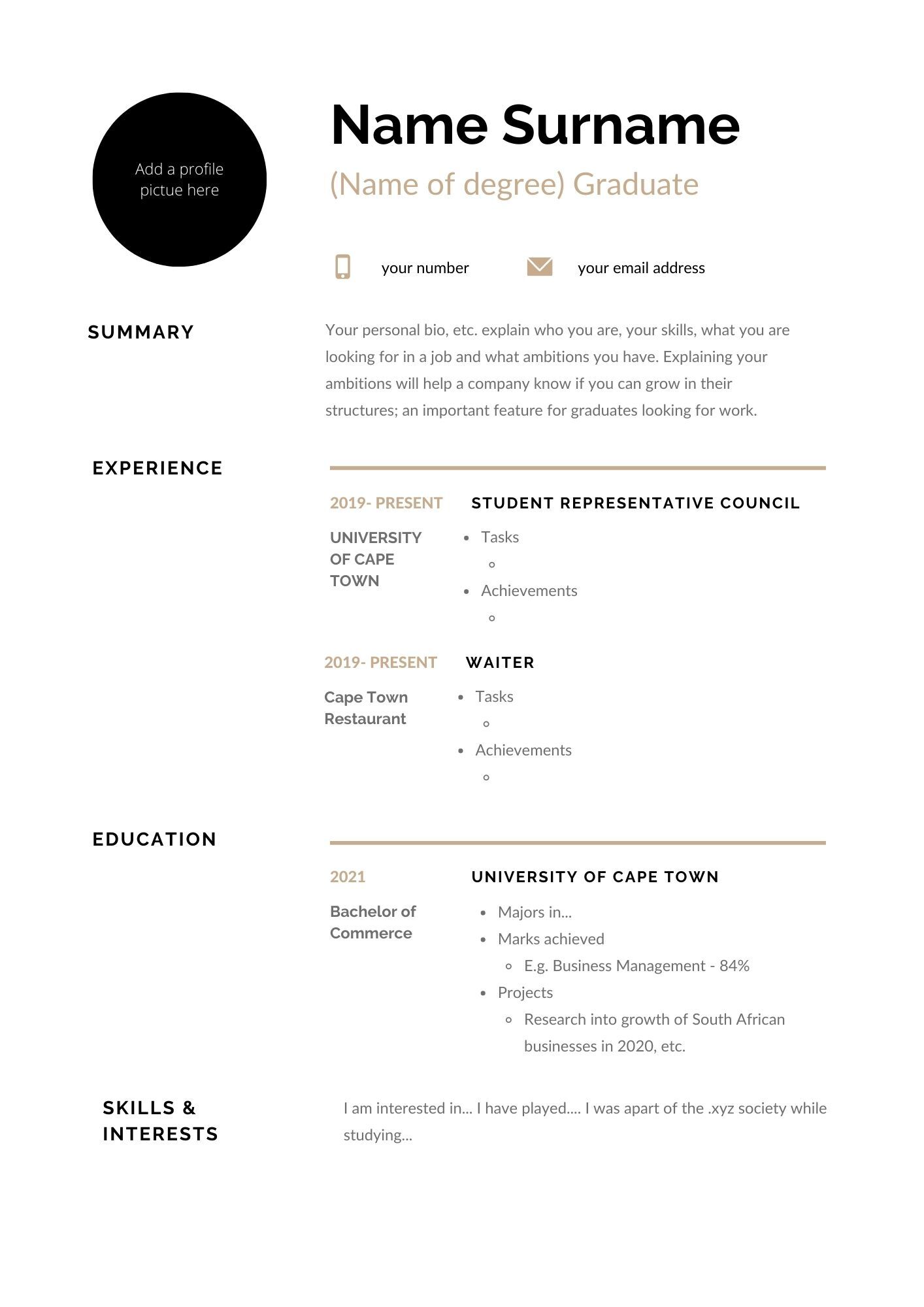
(This represents a generic, professional stock-style image similar to Shutterstock, aligned with CV preparation.)
4. Skills Section (This Replaces Work Experience)
This is where many learners underestimate themselves.
Skills can include:
-
Communication skills
-
Basic computer skills
-
Teamwork
-
Time management
-
Willingness to learn
-
Problem-solving
-
Customer service basics
-
Physical stamina (for manual roles)
Only include skills you genuinely have.
5. Additional Training, Activities, or Experience
Even without formal employment, you may have experience such as:
-
Volunteer work
-
School leadership roles
-
Community involvement
-
Short courses
-
Informal work (helping family business)
This shows responsibility and initiative.
6. References (Simple Is Fine)
If you do not have work references, you can use:
-
A teacher
-
A school principal
-
A community leader
-
A training facilitator
Format example:
References available on request
Or list one reference if required.
 Common CV Mistakes That Get Applications Rejected
Avoid these common errors:
-
Spelling and grammar mistakes
-
Copying CVs from the internet
-
Including false information
-
Using unprofessional email addresses
-
Submitting handwritten CVs
-
Including unnecessary personal details
A clean CV reflects seriousness.
How to Tailor Your CV for Different Learnerships
Do not use one CV for every application.
For each learnership:
-
Adjust your personal profile
-
Highlight relevant skills
-
Align education subjects to the field
This small effort improves your chances significantly.
CV Tips Specifically for Learnerships
-
Use simple language
-
Be honest
-
Keep formatting clean
-
Use bullet points
-
Save as PDF unless instructed otherwise
Professional presentation matters.
Should You Include a Cover Letter?
Some learnerships request a short motivation or cover letter.
If required:
-
Keep it short (one page)
-
Explain why you want the learnership
-
Show interest in the industry
-
Avoid repeating your CV
What Employers Look for When Reading Learnership CVs
Employers typically look for:
-
Clear intention
-
Basic competence
-
Professional attitude
-
Commitment to learning
-
Availability
They are not expecting perfection.
How learners247.co.za Helps Learners Improve Their CVs
Platforms like learners247.co.za help learners by:
-
Explaining CV requirements clearly
-
Providing guidance without false promises
-
Supporting informed applications
-
Reducing misinformation
Reliable guidance increases success.
What to Do After Submitting Your CV
After applying:
-
Keep records of applications
-
Continue applying to other learnerships
-
Improve your CV over time
-
Be patient
Responses can take weeks or months.
Final Thoughts
Writing a learnership CV with no experience is not about impressing employers with past jobs. It is about presenting yourself as ready, willing, and capable of learning.
A well-written CV can open doors, even if you have never worked before. Take the time to prepare it properly, apply consistently, and remain patient. The right opportunity often comes to those who are prepared.